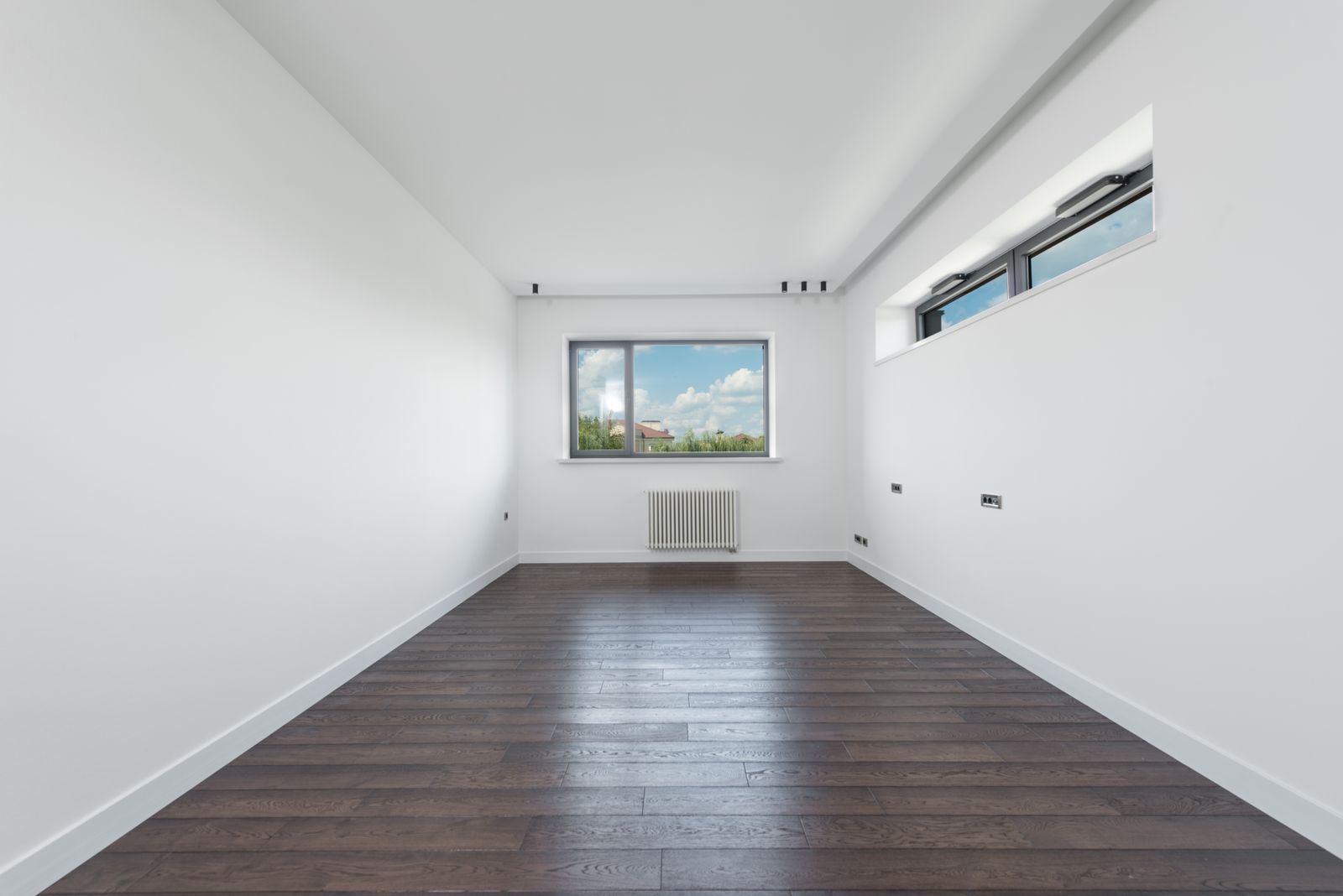
 Before
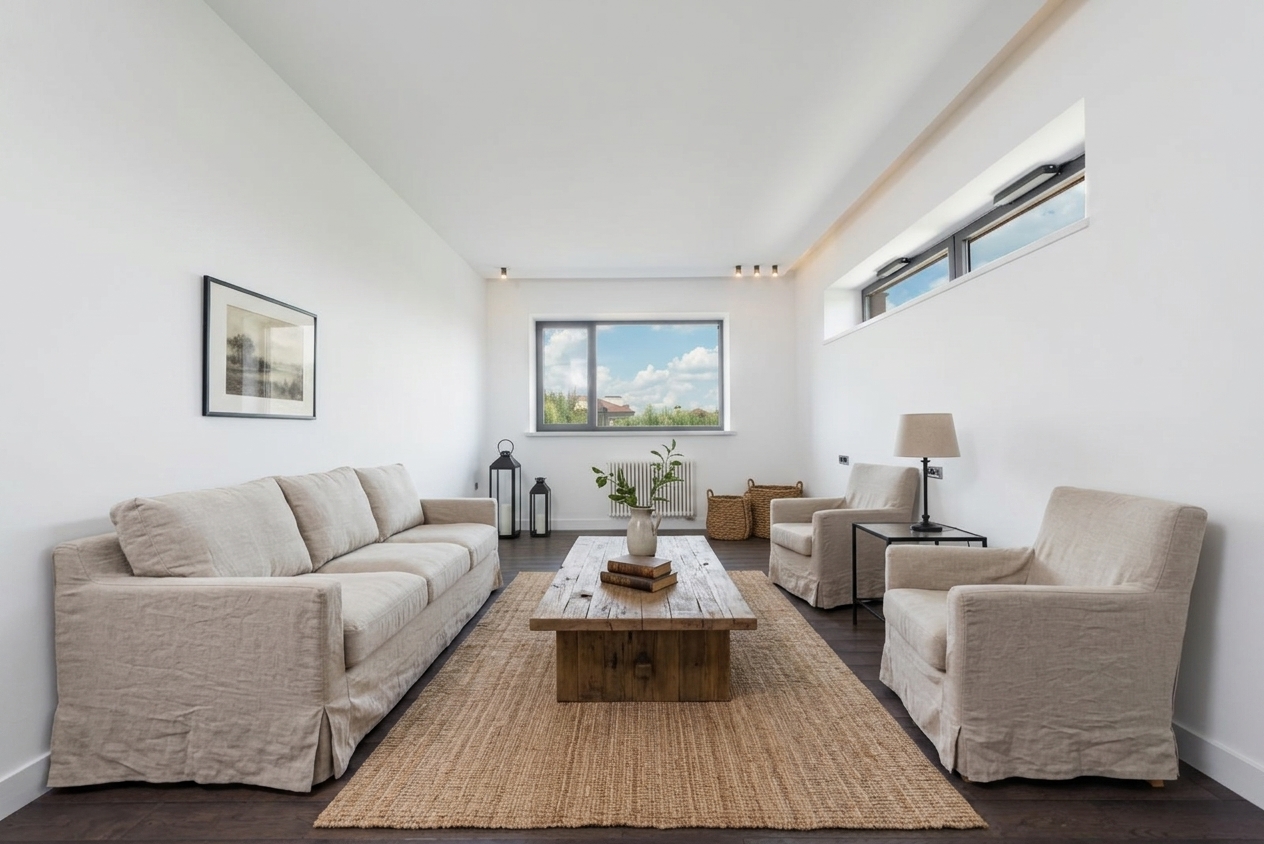 After
AfterWhat defines modern farmhouse staging
Modern farmhouse staging pairs a neutral, warm palette with texture-forward materials: linen slipcovered seating (a defining detail — not tight-upholstered, but relaxed and slightly oversized), a reclaimed or distressed-wood coffee table, and woven baskets used as both storage and decor. Black-iron hardware and light fixtures are the accent metal of choice, not brass or chrome.
The style deliberately mixes some age and imperfection into an otherwise clean room — a slightly weathered wood grain, a linen fabric with visible texture — which is what separates it from purely modern staging. It's meant to feel comfortable and family-oriented rather than showroom-precise.
It has strong ties to actual rural and suburban vernacular architecture: shiplap, exposed beams, board-and-batten siding. Staged into a dense urban condo with none of that architectural context, the look has nothing to anchor to and can feel like a mismatched theme rather than a natural extension of the home.
Which listings it suits
- Suburban and exurban single-family homes, especially newer construction marketed toward families — this is one of the most commercially popular styles in that segment nationally.
- Homes with some yard, acreage, or rural-adjacent setting where the aesthetic has real context, and renovated older farmhouses or barns being sold as a lifestyle property.
- Family-buyer price bands roughly $250K-$700K where the priority is a warm, livable, low-formality look that reads as move-in ready for a family with kids.
Skip it for urban high-rise condos, downtown lofts, and any listing where the architecture and setting are purely urban — the reclaimed-wood, farm-adjacent vocabulary has no context there and can undercut the listing's actual selling points (walkability, skyline views, urban lifestyle).
What to check in an AI render of modern farmhouse style
Not every AI staging render nails a style consistently. Here's what to look for specifically when judging a modern farmhouse render before you publish it to the MLS:
Slipcovers rendered as tight, tailored upholstery
The relaxed, slightly loose fit of linen slipcovers is a defining visual cue. If the AI renders tight, structured upholstery in a beige fabric and calls it farmhouse, it's missing the texture and looseness that actually reads as the style — check the seating silhouette closely.
Metal accents in the wrong finish
Farmhouse staging uses black iron, not brass or polished chrome. A render with shiny brass pulls or chrome fixtures alongside farmhouse furniture is mixing metal languages from two different styles — that inconsistency is worth flagging.
Overcorrecting into rustic-cabin territory
There's a real difference between modern farmhouse (clean lines, a few reclaimed-wood accents) and full rustic-cabin decor (antlers, heavy log furniture, plaid everywhere). If a render tips that far rustic, it's overshooting the brief and will look dated or theme-y rather than current.
Try Modern Farmhouse staging on your own listing
Upload a listing photo and pick this style — the free tier gives you 6 watermarked renders a day, no signup required.
Stage a photo freeFrequently asked questions
- Does farmhouse staging work for condos?
- Generally no — it's designed around suburban and rural single-family architecture (shiplap, exposed beams, some yard context). In an urban condo it tends to look mismatched to the actual building and lifestyle the listing is selling.
- What's the ideal price range for farmhouse staging?
- Roughly $250K-$700K, family-buyer suburban and exurban homes — it's one of the most broadly popular styles in that segment because it reads as warm and move-in ready without being a high design statement.
- How is modern farmhouse different from traditional staging?
- Traditional is more formal and symmetric, with dark wood and classic art. Farmhouse is more casual and texture-forward, with linen slipcovers, reclaimed wood, and black-iron accents — it reads as relaxed family living rather than formal entertaining.
- Does farmhouse staging suit every room?
- It's strongest in living rooms, dining rooms, and kitchens (where black-iron light fixtures and a few countertop accents reinforce the look). It photographs less distinctly in bathrooms, where the style has fewer signature cues to work with.